Received a USCIS notice? Get legal guidance before time runs out..
Key Provisions of the Proclamation
Here are the main points from the official Presidential Proclamation:
- Fee Requirement & Scope
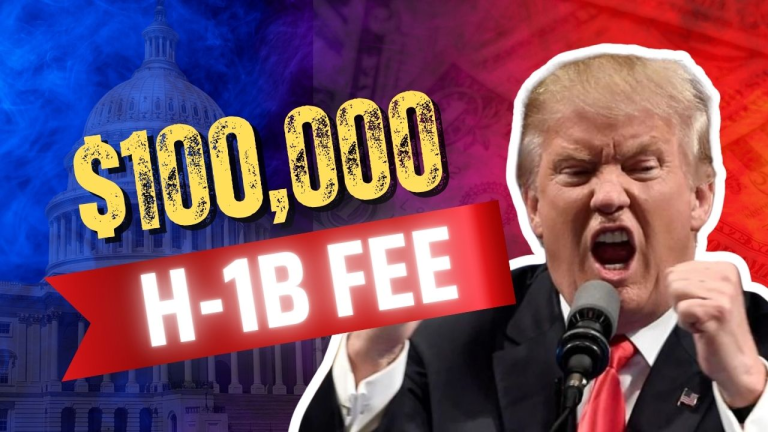
- H-1B petitioners must include a $100,000 payment with new H-1B specialty occupation petitions. This is in addition to the existing filing/registration fees.
- This restriction applies to foreign workers outside the U.S. seeking H-1B specialty occupation status.
- Exemptions (“National Interest” Clause)
- There are case-by-case exemptions if the Secretary of Homeland Security determines that hiring the alien is in the national interest and does not pose a threat to U.S. workers’ wages or welfare.
65,000 H-1B visa regular cap and the 20,000 H-1B visa U.S. advanced degree exemption, known as the master’s cap, for fiscal year 2026.
Who is Not Affected?
- Existing Employees: H-1B workers already inside the U.S. as of September 21, 2025.
- Pre-approved Petitions: H-1B petitions that were approved before the effective date.
- Change of Status/Extensions: Petitions for a change of status or an extension of H-1B status are generally not subject to the fee.
How long is this restriction valid until?
- Valid Period & Entry Restriction
- The fee requirement and restriction on entry expire 12 months after the effective date (i.e. September 21, 2025) unless extended.
- The rule also prohibits the entry of non-immigrant specialty occupation workers unless the payment is made.
- Prevailing Wage Rulemaking
- The Department of Labor is instructed to revise prevailing wage levels under INA §212(n) to align with the goals of this proclamation.
- The Department of Homeland Security is to prioritize high-skilled, high-paid aliens.
- Enforcement, Compliance & Timing
- Employers must obtain and keep documentation showing the payment.
- Visa/consular authorities will verify the payment is made.
- The rule applies to H-1B petitions filed after the proclamation is effective.
- Within 30 days after the next H-1B lottery, key agencies must report back whether the restriction should be extended.
What Are the Possible Results?
Here are the likely impacts and things international students, H-1B applicants, and employers should watch out for:
- Cost Sharp Increase: Companies will need to budget a large upfront cost per petition. Even large firms will feel this.
- Barrier for Smaller Employers & Entry-Level Workers: If your job offer is not high-paying or considered “critical,” companies may decide not to submit petitions under the new fee or may shift roles to locals or remote/offshore.
- Visa Process Delays & Compliance Burden: Verifying payment, documentation, approvals, and navigating exemptions will add complexity.
- Incentive Shift: Employers may bias hiring towards roles with higher salaries or those that clearly fall under the “national interest” exception.
- Alternative Visa Routes & Strategic Planning: O-1, L-1, F-1 + hybrid programs, green card pathways like EB-2 NIW may become more attractive.
What You Should Do If You’re Affected?
If you’re an international student, future H-1B hopeful, or employer, consider these steps:
- Review your offer and the employer’s ability to meet high salary/wage thresholds.
- If possible, negotiate salary / job title to fit where exemptions or prevailing wage rules may favor.
- Keep close records of job offers, wage levels, and employer documents. They will matter.
- Stay updated with USCIS, DOL, and DHS guidance, especially how the “national interest” exemption will be interpreted.
- Explore backup options (other visa types, degree programs with work-authorization components, etc.).
Fuente: Noticias CBS
¿Qué Hacer Si Te Encuentras en Esta Situación?
Descubra la mejor manera de conectarse con Green Card Guys Law Group según sus necesidades y objetivos específicos. Elija entre 3 opciones personalizadas para comenzar.
 Español
  English